2027 Season

CONCERT 1
Symphony No. 1 in Bb Minor (1933-4)
Sir William Walton
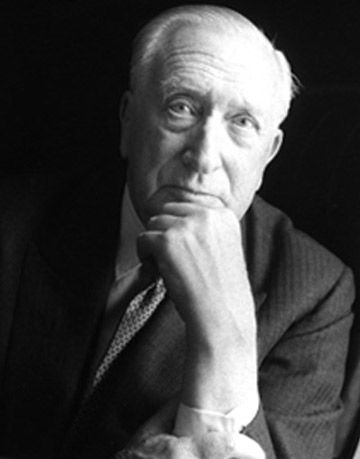
When William Walton began his First Symphony he was 30 years old. His Viola Concerto had already been acclaimed as a masterpiece, and he had shared two happy collaborations with the Sitwell family: Facade, a setting of Edith Sitwell’s poems which had been greeted by an initial uproarbefore becoming a triumphant success, and Belshazzar’s Feast, for which Osbert Sitwell provided the text. At this point in his career a symphony must have seemed the appropriate seal for a reputation which already proposed Walton as the natural successor to Elgar as leader among British musicians.
The son of a Lancashire singing teacher, he was largely self-taught after spending six years in the Choir School at Christ Church, Oxford. There his musical talent had immediately been noticed and fostered, so that he was enabled to enter the University at the age of 16. Success came to him early; thereafter his life story has been largely the story of his music, punctuated by marriage in 1948, the acceptance of a knighthood in 1951 and the creation of a home on the Mediterranean island of Ischia.
CONCERT 2
The Brit. Girls of the 1960s
The timeless Pop Songs as recorded by Petula Clark, Cilla Black, Dusty Springfield, Lulu and more in new symphonic arrangements

Created especially for the Australian Discovery Orchestra, this concert features new orchestrations by Kevin Purcell and Troy Rogan of the most memorable songs from the 1960s as sung by British women vocalists including, Shirley Bassey (Goldfinger, DIamonds are Forever), Lulu (To Sir With Love), Cilla Black (Alfie), Pet Clark (Colour My World, Downtown, Don’t Sleep on the Subway), Dusty Springfield (Windmills of Your Mind) and many other timeless and much-loved songs from outstanding songwriters such as Burt Bacharach, Tony Hatch and Jackie Trent, John Barry, Michel Legrand and Alan and Marilyn Bergman.